
Currently Empty: 0,00 €


Cooking
Delightful Dishes Cooked from Scratch
It’s time to rediscover the rewards of cooking from scratch: you will learn practical techniques, ingredient selection, and time-saving prep that turn simple components into flavorful, nutritious meals. This guide gives clear, tested methods and adaptable recipes so you can build confidence in the kitchen, streamline weekly menus, and impress family and guests with consistent results while keeping costs and waste low.
The Allure of Cooking from Scratch
The Sensory Experience of Homemade Meals
Aroma of onions caramelizing and a sizzling pan floods your senses, with about 80% of perceived flavor coming from smell; the Maillard reaction at 140–165°C creates those savory, browned notes you crave. You feel texture differences immediately—al dente pasta (8–11 minutes) versus overcooked mush—and notice how simple tweaks, like finishing a sauce with butter or lemon, amplify aroma, mouthfeel and overall satisfaction.
Building Connections Through Shared Meals
Passing bowls and sharing prep during a 30–45 minute family dinner turns cooking into a ritual that strengthens bonds; studies link five or more shared meals per week with better adolescent nutrition and communication. You can assign roles—chopper, stirer, server—to involve kids, and a weekly “theme night” keeps participation consistent while creating memories tied to specific dishes.
You can scale that intimacy: host a monthly potluck for 6–8 neighbors with a 90-minute window, ask each guest to bring one dish and a short story, or run a three-session workshop where a grandparent teaches a signature recipe while you document measurements and photos. These concrete practices turn recipes into shared history and measurable social rituals that sustain relationships over years.
Essential Ingredients: Fresh Is Best
Locally Sourced Produce
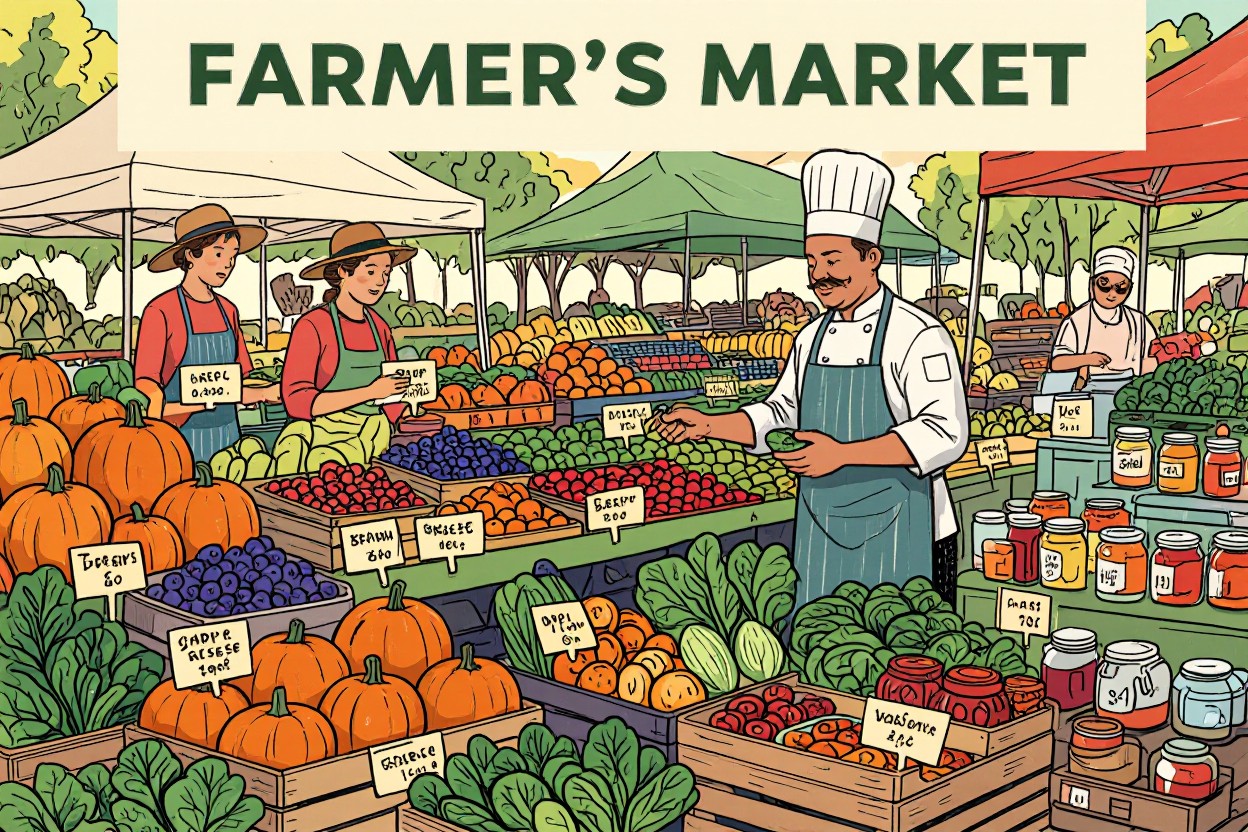
Buy from farmers’ markets, CSAs, or farmstands and ask growers the harvest date; produce picked within 24–72 hours and grown inside a 50–100 mile radius typically retains more flavor and nutrients. Seek mid‑August heirloom tomatoes, early‑summer peaches, and winter storage apples; you’ll notice firmer texture, brighter aroma, and salads that don’t need heavy dressing to taste lively.
Understanding the Importance of Quality Pantry Staples
Prioritize specific staples: choose bread flour (12–13% protein) for crusty loaves and 00 flour for tender pasta, pick extra‑virgin olive oil with acidity ≤0.8% and a stamped harvest date within 18 months, and swap in whole spices since they retain potency 2–3 years versus ground at ~6–12 months.
Store staples in airtight glass jars away from heat and light, rotate stock every 6–12 months, and buy beans and grains in 1–5 lb bags from trusted mills to avoid stale batches; use kosher or flaky sea salt for finishing and apply about 2% salt by weight for most bread doughs to balance flavor.
Cooking Techniques That Elevate Flavor
The Art of Sautéing and Browning
Preheat a heavy skillet over medium‑high heat for 2–3 minutes until shimmering, then add 1–2 tbsp oil with a smoke point above 400°F and your aromatics. Aim for surface temperatures that trigger the Maillard reaction (roughly 140–165°C / 284–329°F) so meat sears in 2–4 minutes per side and diced onions brown in 5–8 minutes. Keep pieces uniform, avoid overcrowding, and finish by deglazing with 30–60 ml of wine or stock to lift those browned bits into a pan sauce.
Mastering the Slow Cooking Process
Set a slow cooker to Low (~200°F / 93°C) for 6–10 hours or braise in a 275–325°F (135–165°C) oven for 2–6 hours depending on cut size; aim to have connective tissue reach collagen‑to‑gelatin range (about 70–96°C / 160–205°F) for tender results. Use enough liquid to come one‑third to one‑half up the side of the meat, and tuck in a defined mirepoix and aromatics for layered flavor.
Sear meat first to build a browned flavor foundation, then deglaze the pan and add the deglazing liquid to the braising vessel; that liquid concentrates into sauce as you cook. Use a 2:1:1 mirepoix ratio (onion:carrot:celery) for classic depth, skim excess fat after cooking, and reduce the braising liquid on high heat for 8–12 minutes to intensify. For pull‑apart pork aim for an internal temp of roughly 195–205°F (90–96°C); for sliceable roasts stop around 145–160°F (63–71°C) and rest 10–20 minutes before serving. Avoid lifting the lid frequently—each opening drops temperature and adds 15–20 minutes to total time on long cooks.
Crafting Comfort: Hearty Soups and Stews
The Soul-Warming Benefits of Home-Cooked Soups
You gain both nutrition and economy by making soups: bone broths simmered 8–24 hours release collagen and minerals, vegetable broths keep vitamins with 30–60 minute cooks, and one large pot can produce 6–8 servings for a fraction of takeout cost. You control sodium, fat and allergens, tailor aromatics like ginger, garlic and turmeric for cold-relief, and stretch seasonal produce into comforting, nutrient-dense meals that hydrate and warm efficiently.
Signature Stews That Define Cultural Heritage
You taste history in stews: Hungarian goulash hinges on smoked paprika and long braises, Moroccan tagine layers preserved lemon and cumin in a conical pot, Mexican pozole combines hominy and pork for communal fiestas, and Nigerian egusi uses ground melon seeds to thicken. You build depth by searing, deglazing and slow-simmering tougher cuts for 2–4 hours to unlock collagen-rich mouthfeel and layered spice profiles.
You reproduce authentic character by matching technique and vessel: use a clay tagine or covered Dutch oven to retain steam, sear meat until a deep brown fond forms, then deglaze with wine or stock; select local thickeners—roux for French preparations, ground melon seeds for egusi, or okra/filé for Creole styles—and aim for roughly 1 part protein to 2–3 parts liquid. You finish with bright acid (lemon, vinegar) or fresh herbs and serve with traditional accompaniments—couscous, rice, tortillas—so flavor and ritual align with each culture’s intent.
Baking Basics: From Bread to Pastries
The Science of Making Perfect Bread
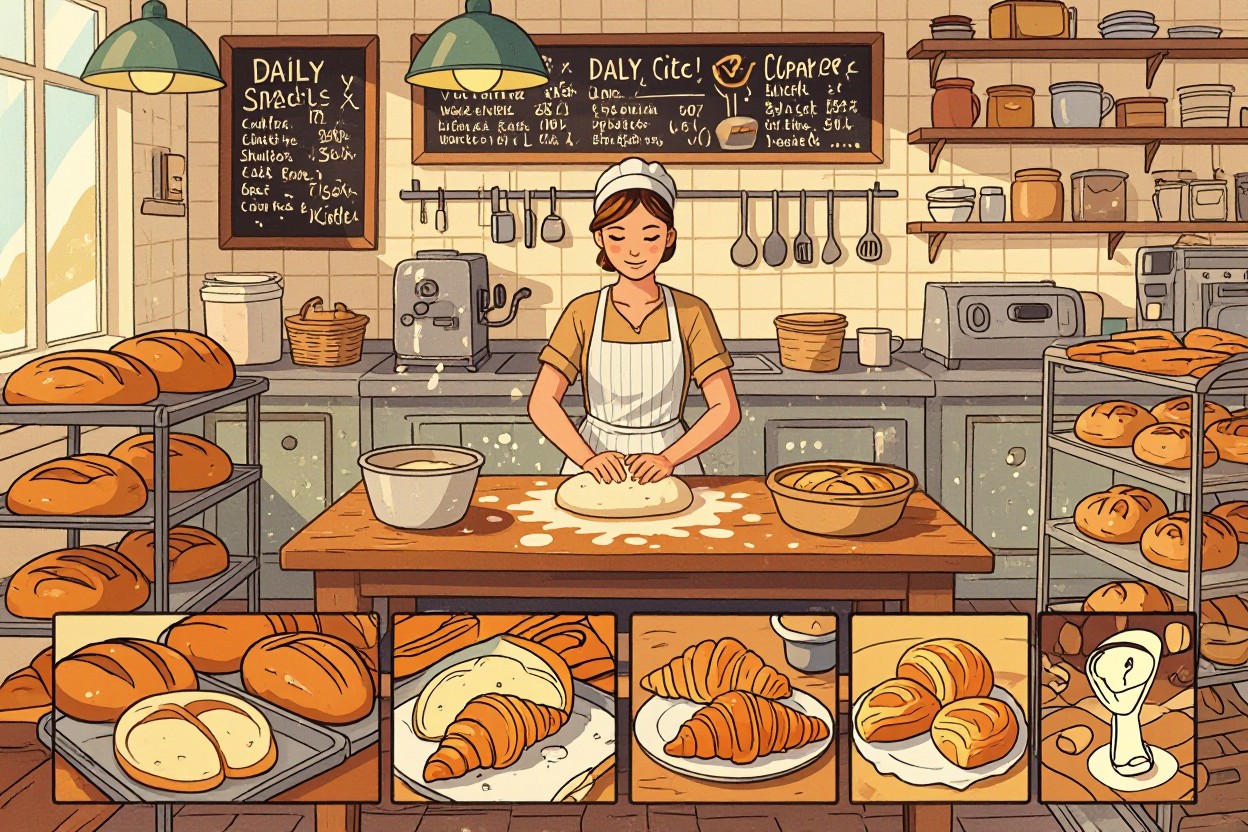
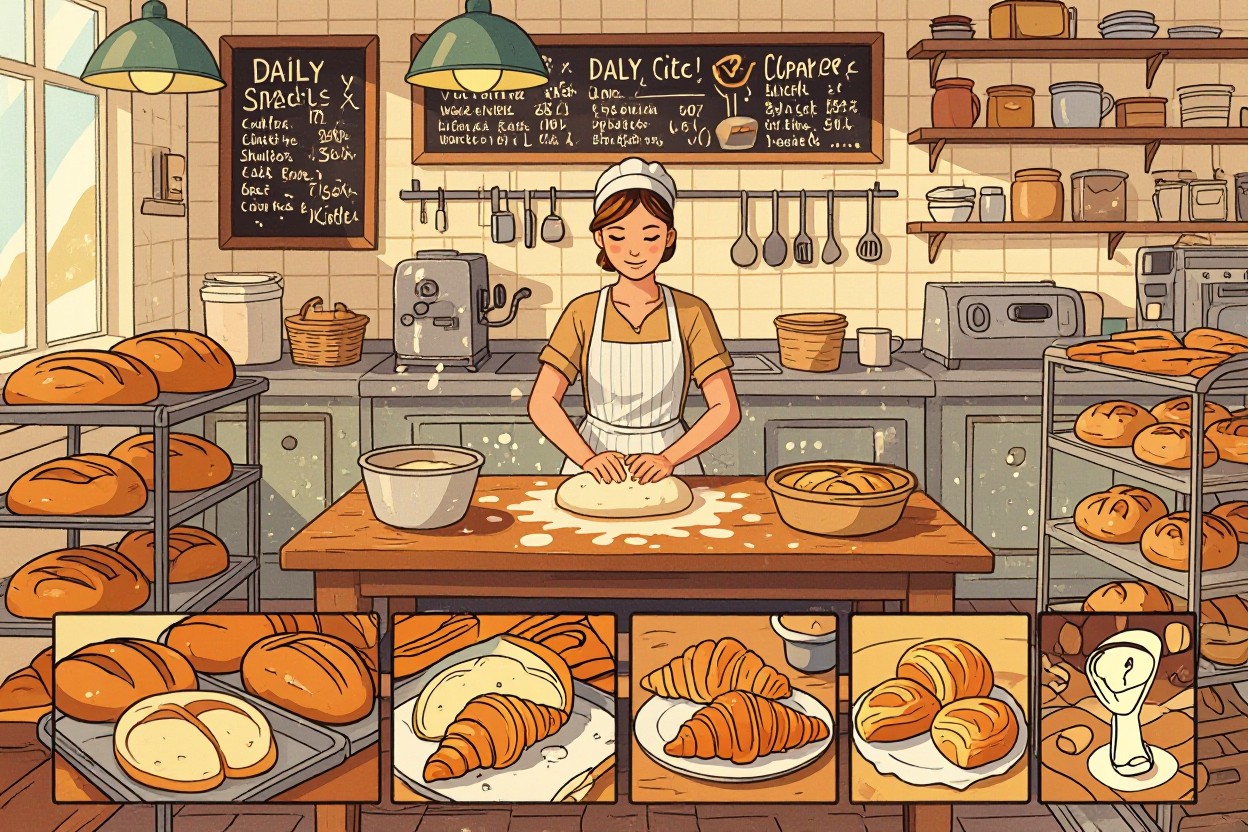
Aim for 65–75% hydration for an open crumb and 60–65% for sandwich loaves; autolyse 20–40 minutes, then you knead 5–10 minutes by hand or 3–5 minutes in a mixer. Bulk ferment 3–4 hours at 24°C or retard in the fridge 12–18 hours for deeper flavor. Bake at 230–250°C with steam for the first 12–15 minutes, score just before loading, and expect a pronounced oven spring.
Timing and Techniques for Flaky Pastries
Keep butter refrigerator-cold (6–8°C) and work quickly so you preserve discrete fat layers; laminate with 30–60 minute rests between turns, and six single turns will generate hundreds of layers. Final proof often runs 90–120 minutes at 24°C for laminated doughs. Bake at 200–225°C for 18–25 minutes, using steam or a hot tray to encourage lift and glossy color.
Layer control and fat consistency determine flakiness, so you should match the butter’s pliability to the dough and chill between folds: rest 30–60 minutes on a cool surface or in the fridge to keep butter near 6–10°C. For croissants you can bulk-ferment overnight (12–16 hours), laminate with three single turns or two book folds, then proof 90–120 minutes at about 24°C before baking at 190–200°C for 15–18 minutes. For tart shells, blind-bake at 190°C with weights 15–18 minutes, remove weights and finish 5–7 minutes to dry the crust and avoid soggy bottoms.
The Science of Flavor: Herbs and Spices
How to Harness the Power of Fresh Herbs
Use fresh herbs to brighten dishes: add tender herbs like basil, cilantro, and parsley in the last 1–2 minutes or as a finish to preserve volatile oils; add hardy herbs such as rosemary, thyme, and oregano early so their lignified stems release flavor during long simmers. Chop delicate leaves with a razor-sharp knife or chiffonade to avoid bruising; substitute dried at a 3:1 ratio (three parts fresh to one part dried). Store stems upright in a jar of water or wrapped in damp paper towel in the fridge, and freeze chopped herbs in olive oil for 1–3 month portions.
The Role of Spices in Creating Depth of Flavor
Toast whole spices in a dry skillet for 1–2 minutes until fragrant, then grind or bloom them in 15–30 ml (1–2 tbsp) of oil for 30–60 seconds to unlock crucial oils and increase aroma; ground spices that cook longer—like turmeric, smoked paprika, and ground cumin—benefit from early heat to meld with Maillard flavors, while finishing spices such as garam masala or fenugreek leaf preserve top notes when added at the end. You’ll get more complexity by balancing toasted seeds, ground powders, and fresh aromatics.
Whole spices retain volatile compounds far longer than ground—store whole spices up to 2–3 years, ground for about 6–12 months, and replace when aroma fades. Chemically, toasting raises volatile terpene and phenolic concentrations; grinding increases surface area releasing those compounds immediately, which is why you might toast 1 tbsp cumin and 1 tbsp coriander seeds, grind them, then bloom in 2 tbsp oil for 45 seconds before adding 1 kg of braised beef or a lentil stew—the result is measurable: a pronounced increase in aroma intensity and perceived depth compared with using the same mass of pre-ground spices straight from the jar. Adjust quantities by tasting: a typical starting point is 1 tsp ground spice per 500 g of protein or vegetables, then fine-tune from there.
The Power of Presentation: From Plate to Palate
Techniques for Skillful Plating
Use asymmetry and the rule of thirds to arrange components—place your focal item off-center, group supporting elements in 3s or 5s, and leave roughly one-third of the plate as negative space. Build 2–3 layers of height with stacked proteins or quenelles, contrast colors (bright greens against roasted browns) and textures (crisp, creamy). Finish with microherbs, a sauce swipe, and measured droplets to give your dish a restaurant-level polish.
The Impact of Visual Appeal on Appetite
Visual cues prime your appetite: color, symmetry, and portion framing shape expectations and salivation. Plate size can alter perceived serving—research suggests larger plates may increase portions by up to 30%—while high color contrast signals freshness. Presenting elements in odd numbers and varying textures can make a 400-calorie portion feel more satisfying because your brain reads variety as complexity and value.
Oxford sensory researcher Charles Spence and the field of neurogastronomy show that sight directly alters taste expectations, so you can manipulate perception: try a white plate for vivid color pop or a dark plate for rich sauces. Small changes—switching to a rimless plate, adding 1–2 vertical elements, or increasing color contrast—often shift diners’ ratings in controlled tests, proving presentation alters both appetite and perceived flavor.
Diet-Specific Delight: Cooking for Dietary Needs
Gluten-Free and Vegan Options that Shine
You can build vibrant meals with chickpea-socca pancakes, buckwheat crepes, or oat-flour banana bread that rise and taste great. Use 1 tbsp ground flax + 3 tbsp water as an egg substitute or 3 tbsp aquafaba per egg for meringues; add 1 tbsp psyllium husk per cup gluten-free flour to improve crumb. Make tempeh kebabs, lentil shepherd’s pie, and nutritional-yeast–rich sauces for B12-fortified savory notes without sacrificing texture or depth of flavor.
Ensuring Nutrition Without Sacrificing Flavor
Aim for 20–30 g protein per meal by combining sources—quinoa (≈8 g protein per cooked cup), lentils, tofu or canned salmon—while keeping meals exciting with spice blends and acid finishes. Balance macros with a tablespoon of olive oil for healthy fats and 25–38 g fiber daily from beans, whole grains, and vegetables; pair iron-rich greens with citrus or bell pepper to boost nonheme iron absorption.
Use cooking techniques to elevate nutrition and taste: roast vegetables at 425°F (220°C) for 25–30 minutes to caramelize natural sugars, marinate tofu or tempeh for depth, and add umami via miso, tomato paste, or mushrooms. Swap half ground meat with 1 cup cooked lentils (adds roughly 18 g protein and ~15 g fiber) in sauces to cut saturated fat while preserving savory satisfaction.
Tools of the Trade: Essential Kitchen Equipment
Must-Have Gadgets for the Aspiring Chef
You’ll want a digital scale (±1 g accuracy) for precise baking, a Thermapen-style instant-read thermometer (reads in ~2–3 seconds) for meats, and a 7–10 cup food processor for quick prep. Add an immersion blender for soups and emulsions, a microplane for zest and nutmeg, a 4.5–6 qt stand mixer if you bake frequently, and sturdy tongs, a bench scraper, and silicone spatulas to round out everyday tasks.
The Importance of Sharp Knives and Quality Cookware
Sharp knives with a 15–20° edge angle slice cleanly and reduce fatigue; hone your blade before each session and schedule sharpening every 6–12 months depending on use. Invest in tri-ply stainless cookware for even heat—look for a 10–12″ skillet, a 3–4 qt saucepan, and a 5–6 qt Dutch oven to cover 90% of recipes. Quality tools improve results and speed.
Select an 8″ chef’s knife as your workhorse, pair it with a 3.5–4″ paring knife and an 8–10″ serrated bread knife for versatility; choose high-carbon stainless for edge retention (VG-10-style alloys perform well). Use a 1000/3000 grit whetstone for routine sharpening and progress to 6000–8000 grit for a polished edge, or rely on a pro sharpener annually. For cookware, preheat cast iron 5–7 minutes on medium for even searing, avoid heating nonstick pans above 260°C (500°F), and maintain stainless by deglazing to lift fond and preserve surface finish.
Time-Saving Strategies for Cooking Enthusiasts
Meal Prep and Batch Cooking Techniques
Roast 2–3 sheet pans of seasonal vegetables on Sunday (45–60 minutes at 400°F) and cook 2–3 proteins—roasted chicken thighs, baked tofu, or salmon—to portion into 6–10 meals. Use mason jars for salads, label dates, and freeze portions in 2-cup containers. With a focused 90–120 minute session you can assemble a week’s worth of lunches and dinners, cutting weekday prep to 10–15 minutes.
Planning Ahead: Mastering Weekly Menus
Block 45–60 minutes to map 5 weeknight dinners with theme nights like Meatless Monday and Taco Tuesday to simplify choices; cross-use ingredients so one roast chicken becomes sandwiches, soup, and tacos. Create a shopping list with exact quantities (e.g., 2 lb chicken, 4 cups rice, 3 bell peppers) and sync it to your phone to limit grocery trips to once weekly.
Start your weekly plan with a template: pick 2 proteins, 3 vegetables, and 2 starches, then assign them across five nights to maximize reuse—for example, roast chicken on Monday (45 min), chicken tacos on Wednesday (25 min), and chicken‑and‑rice bowls for Friday lunch (10 min). Schedule two 30–60 minute prep slots (Sunday and Wednesday) for chopping, sauce-batching, and partial cooking; keep a “use within” list on the fridge and note leftovers that convert into at least three distinct meals to reduce waste and streamline decision-making during busy evenings.
Family Traditions: Recipes Passed Down Through Generations
The Emotional Resonance of Family Recipes
You can taste history in a single bite: a three‑generation apple pie that your grandmother baked 40–50 minutes at 375°F, a Jewish brisket slow‑braised for 3–4 hours on Shabbat, or a pho broth simmered 6–8 hours to extract marrow and collagen. Those precise times, techniques, and small tweaks—extra cinnamon, a splash of lemon—anchor family stories, trigger memories, and hand down identity through flavor.
Reinventing Classics for a Modern Palate
You update heirloom dishes by swapping techniques and proportions: use a pressure cooker to reduce a 4–6 hour ragù to 60–90 minutes, replace 100 g of butter with 80 ml olive oil for lighter texture, or add 1 tsp smoked paprika to boost depth. Chefs like Massimo Bottura have shown how respectful tweaks—preserving core flavors while altering form—keep traditions alive for today’s tastes.
You can modernize step‑by‑step: start by identifying the dish’s flavor anchors (acid, fat, aromatics), then test one change at a time—pressure‑cook bones 45–75 minutes instead of an all‑day simmer, substitute Greek yogurt 1:1 for sour cream to cut fat while keeping tang, or incorporate global ingredients such as 1 tbsp miso paste to deepen umami. Plate smaller portions, emphasize texture contrasts, and note each adjustment so you preserve the recipe’s soul while making it practical for your kitchen and diners.
Seasonal Cooking: Embracing Nature’s Calendar
Adapting Recipes to Seasonal Ingredients
Swap ingredients to match peak availability: replace summer tomatoes with roasted butternut and sage in autumn pasta, trade basil for thyme or rosemary when herbs fade, and cook spring greens briefly—2–3 minutes stir‑fry—to preserve texture. Use root vegetables for long roasting in winter and bright citrus or preserved lemons to lift heavy dishes. Consult local harvest calendars (asparagus April–May, strawberries May–June, apples Sept–Nov) and adjust cooking times and acidity for optimal balance.
The Benefits of Eating According to the Season
Seasonal produce tends to deliver better flavor and nutrition because it’s picked at peak ripeness: tomatoes are sweetest July–September, asparagus peaks April–May, and strawberries shine in May–June. Some vegetables can lose up to 50% of vitamin C after weeks in storage, so choosing in‑season items often means higher nutrient density and more satisfying taste in your meals.
Locally sourced, in‑season ingredients also lower your environmental footprint by cutting transport and refrigeration needs—local market produce often travels under 100 miles versus imports that cross continents. You can capitalize on abundance by preserving: blanching and freezing berries or fermenting cucumbers extends seasonal value and stretches grocery budgets across months.
The Cultural Significance of Homemade Meals
Exploring Global Cuisines Through Scratch Cooking
You can trace regional histories by mastering techniques like nixtamalization for corn used in tortillas and tamales, dashi-making in Japanese washoku, or fermentation methods behind kimchi and sourdough. UNESCO listed Mexican cuisine in 2010 and washoku in 2013 for their cultural importance, and hands-on scratch cooking exposes you to ingredients such as masa, teff, or urfa pepper, revealing trade routes, seasonal cycles, and flavor logic that packaged food rarely conveys.
How Cooking Reinforces Cultural Identity
You reinforce identity when you prepare ceremonial dishes: families steam tamales at Día de los Muertos, pound mochi for Oshogatsu, or gather for Sunday paella. Recreating ancestral recipes transmits memory and etiquette—elders teach specific hand techniques, timing, and language tied to food—so your kitchen becomes a classroom where cultural knowledge is embodied rather than merely recorded.
In diaspora communities you both preserve and adapt culinary heritage: sourcing heirloom maize or using local produce with ancestral methods keeps biodiversity and tradition alive, while hybrids like Korean tacos illustrate evolving identity. Hosting those meals sends cultural signals to younger generations, turns recipes into living archives, and sustains communal calendars of festivals and seasonal practice across borders.
Final Words
So, when you cook delightful dishes from scratch, you gain control over ingredients and techniques that elevate flavor, boost nutrition, and sharpen your culinary skills; by planning, practicing, and tasting, you transform simple components into memorable meals that showcase your care and creativity.