
Currently Empty: 0,00 €


Business
How to Handle Common Sales Challenges
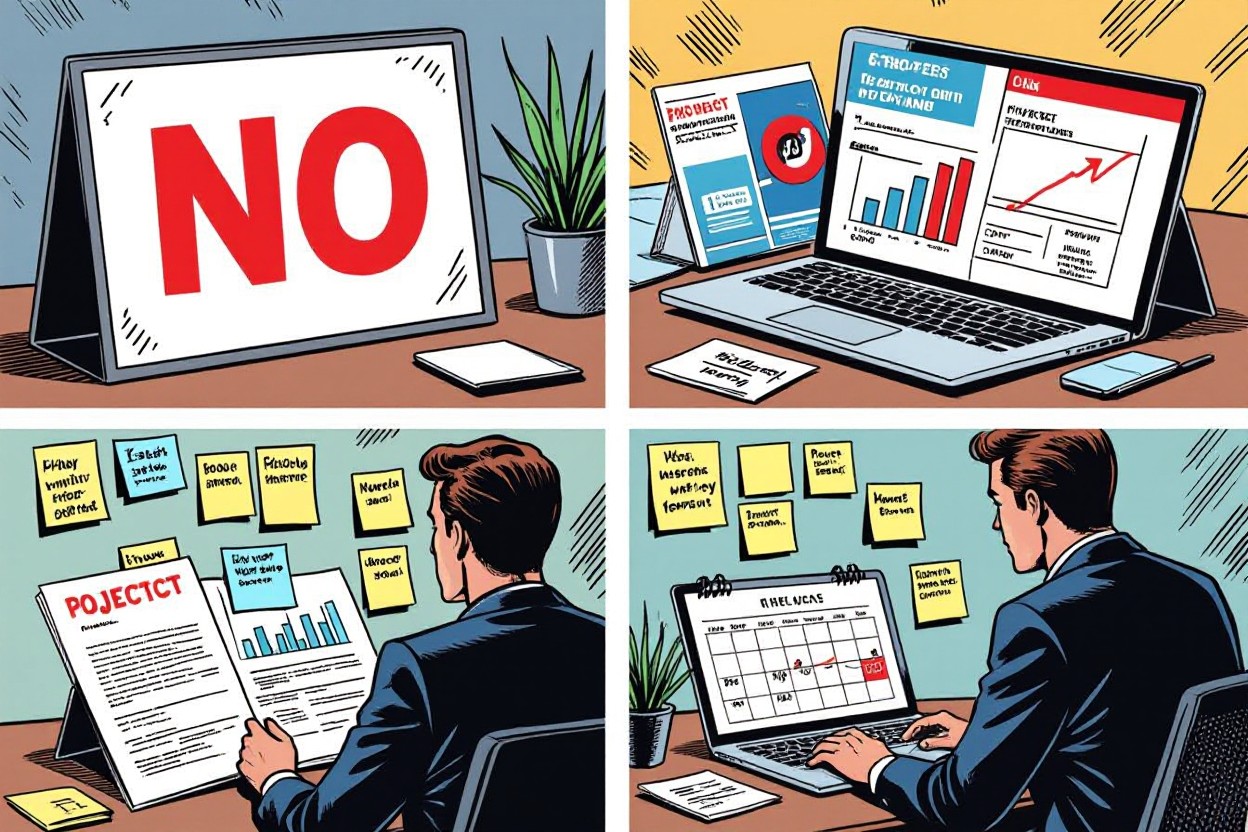
Most sales obstacles can be anticipated and overcome when you apply structured techniques, sharpen your questioning, and adapt your approach to each client. You will learn to diagnose objections, prioritize prospects who fit your value, leverage social proof and concise proposals, and manage pipeline stages to shorten deal cycles. This guide gives practical strategies and frameworks you can implement immediately to increase close rates and maintain consistent performance under pressure.
The Pricing Paradox: Balancing Value and Profit
Strategies for Effective Pricing
Align pricing with measurable outcomes: calculate Customer Lifetime Value (CLTV) versus Customer Acquisition Cost (CAC) to set floor and ceiling, then test value-based tiers that charge per outcome (e.g., $X per active user or saved hour). Use anchoring and decoy options to steer choices, A/B test price points (run at least 10,000 page views per variant for statistical power), and monitor churn sensitivity—small increases of 5–15% can raise revenue without hurting retention if you reinforce value.
Recognizing the Value Perception Gap
Spot the gap by comparing what you sell to what buyers believe they’re buying: run willingness-to-pay surveys, track demo-to-purchase conversion rates, and measure how often prospects quote feature lists versus ROI. Case evidence shows clearer ROI messaging can boost willingness to pay by roughly 10–20%, so prioritize metrics that prove outcomes rather than listing specs.
Close the gap with concrete proof points: publish customer ROI studies showing dollar savings or time reclaimed (e.g., “Customer X reduced support costs by $45K/year”), build an ROI calculator on your pricing page, and segment messaging by buyer persona so you highlight the 1–2 benefits that matter to each group. Pilot a premium plan with guaranteed KPIs for 90 days to capture value-based testimonials, then roll successful proof into broader price increases backed by data.
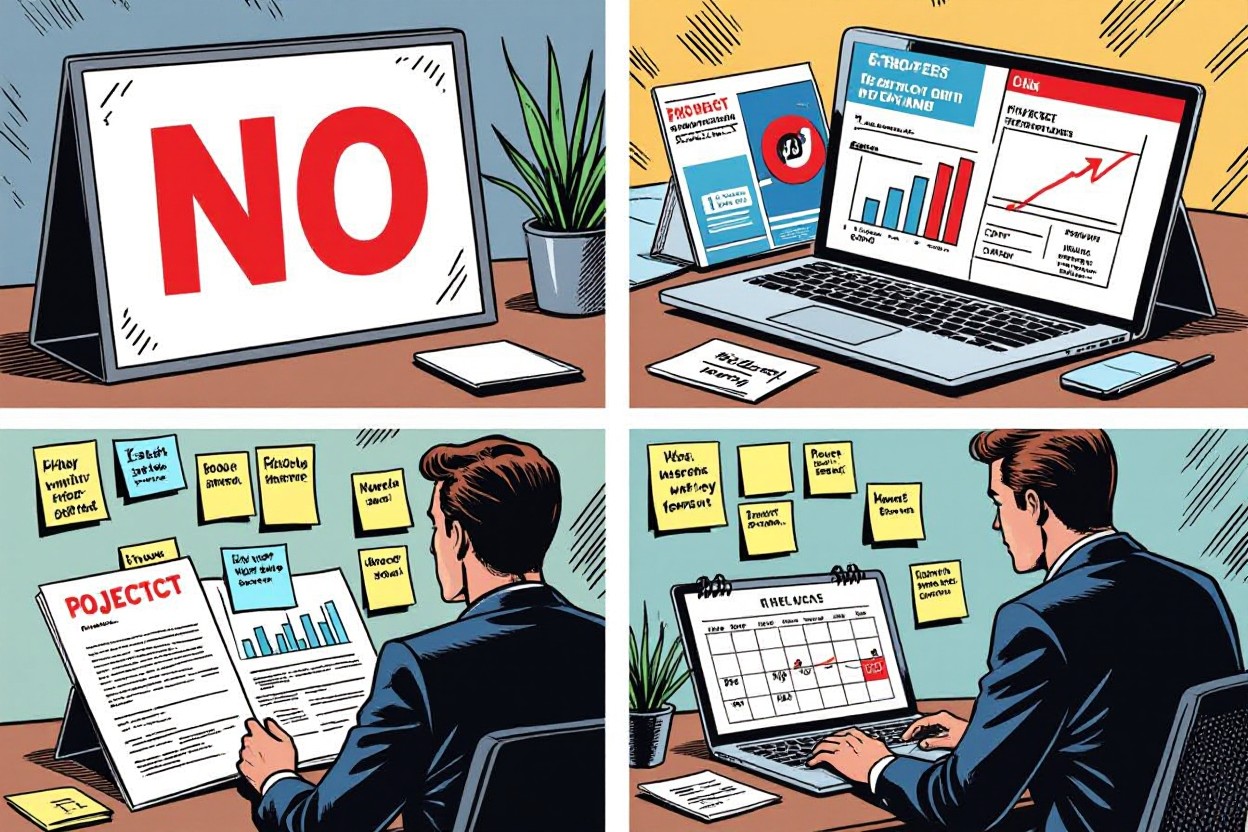
Breaking Through the No: Overcoming Customer Objections
The Art of Active Listening
Use silence strategically and mirror the prospect’s language to surface the real objection: paraphrase their point, then ask 3–5 clarifying questions (who else is involved, what timeline do you expect, which metric must improve). Aim for a 70/30 listening-to-speaking ratio during discovery; that shift often reveals constraints like fiscal quarter cutoffs or renewal windows that convert vague “no” answers into concrete next steps.
Tailoring Responses to Specific Concerns
Categorize objections fast—price, timing, fit, risk—and match responses precisely. For price, present a 3-year TCO or monthly cost breakdown tied to ROI; for timing, propose a 30-day pilot with agreed KPIs; for integration risk, share a step-by-step 21-day rollout plan used with similar customers so the prospect sees a repeatable path forward.
Quantify outcomes to make your response persuasive: calculate payback period in months, estimate uplifts (pilot ranges often show 10–20% performance gains), and prepare a one-page ROI that links features to dollars saved or revenue gained. Include brief case notes—deployment time, measured benefit, stakeholder names—to let the prospect validate claims quickly and say yes to the next step.
The Forecasting Misstep: Accurately Predicting Sales Trends
Utilizing Data Analytics for Smarter Projections
Tap into your CRM and analytics stack: pull 24 months of closed-won/lost data, website traffic, and lead-velocity metrics. Build 12-week rolling forecasts and weight opportunities by stage using historical close rates; apply models such as exponential smoothing or Facebook Prophet to capture seasonality. Track forecast error with MAPE and automate daily ETL pipelines so projections update with new MQLs, average deal size shifts, or rep velocity changes.
Adjusting Strategies Based on Market Fluctuations
Monitor leading indicators daily: if you see lead volume drop 15% month-over-month, reallocate SDR hours to high-intent channels and increase targeted content offers. Test time-limited pricing or shorter contract terms to accelerate closes; measure lift in four-week windows and pivot spend between paid search and organic based on cost-per-lead changes.
For example, a mid-market SaaS provider faced a 20% decline in enterprise inquiries after a regulatory shift; you could introduce a three-month pilot at a 25% discount, simplify procurement paperwork, and prioritize outreach to industries with steady demand. Track conversion rate and average deal size weekly, and reallocate roughly 30% of SDR capacity to warm accounts—this approach often recovers 50–70% of pipeline value within 6–8 weeks when paired with rapid offer iteration.
The Follow-Up Conundrum: Mastering Post-Sale Engagement
Best Practices for Effective Follow-Up
Adopt a 24-hour initial response, then execute a 5-touch cadence over 30 days (days 1, 3, 7, 14, 30) across email, phone, and LinkedIn. Log every interaction in your CRM with clear next steps and attach meeting notes or a one-page recap. Personalize each message by citing a specific pain point or KPI; personalized outreach can double reply rates. Use value-led touches—reports, how-to videos, or ROI snapshots—so every follow-up advances the relationship, not just the sale.
Creating Lasting Client Relationships
Design a 90-day onboarding playbook with milestones, then shift to quarterly business reviews (QBRs) that track agreed KPIs like adoption rate and time-to-value. Survey NPS or CSAT after onboarding and act on verbatim feedback within 10 business days. For example, a mid-market SaaS team implemented monthly check-ins and saw onboarding adoption climb 40% within three months.
Map a clear lifecycle: first 30 days focus on implementation (weekly check-ins, training sessions, success checklist), days 31–90 on adoption (usage dashboards, targeted enablement, milestone emails), and post-90 on value expansion (QBRs, case-study opportunities, referral asks). Tie renewal health to concrete metrics—active users, feature adoption ≥60%, and support ticket velocity—and set automated alerts when any metric dips so you can intervene before churn risk rises.
Navigating Fierce Competition: Standing Out in a Crowded Market
Identifying Your Unique Selling Proposition
Audit your product against the top three competitors and quantify one differentiator customers value most — for example, 35% faster processing time, 15% lower total cost of ownership, or dedicated 24/7 support that reduces downtime by 40%. Translate those metrics into clear claims (“35% faster,” “saves $X per month”) and test messaging across two high-traffic channels to find the variant that lifts CTR and demo requests.
Leveraging Customer Testimonials and Case Studies
Collect outcome-focused testimonials that cite measurable results such as conversion uplift, revenue gains, or time savings; short quotes work for social proof while full case studies back up enterprise buyers with data like “$120K revenue increase in 6 months” or “churn reduced 1.4% monthly.” Place these on landing pages, pricing, and email sequences to turn credibility into conversions.
- Acme Retail — 48% increase in online conversions, $120,000 revenue lift in 6 months after personalized checkout; CAC down 22%.
- Beta SaaS — Onboarding time reduced 35% (40 → 26 minutes), NPS rose 42 → 68 in 3 months; monthly churn down 1.4 percentage points.
- HealthCo — Operational costs cut 18%, case throughput +25% per week, achieved 3.2x ROI within 12 months.
- FinServe — Compliance errors fell 70%, annual savings $300K; adding a customer quote on the landing page increased conversion by 12%.
Structure your case studies around three core metrics: baseline, intervention, and outcome, and include timeframes and dollar values where possible. Use a mix of formats — 60–90 second videos, one-page PDFs, and 300–600 word write-ups — since video testimonials have been shown to increase time-on-page by 50% and conversions by ~34%, while downloadable PDFs turn 18% of viewers into qualified leads within 90 days.
- Delta Logistics (video) — 90s homepage testimonial: time-on-page +50%, conversions +34%, monthly MRR +$27,000.
- GreenEnergy (PDF) — 1,200 downloads Q1; 18% of downloaders converted within 90 days, adding $210,000 ARR.
- EduPlatform (pricing page quote) — free-to-paid conversion 6% → 8.5% (+41%), $45,000 extra revenue in 4 months.
- RetailApp (email highlight) — including “26% sales growth” in drip increased CTR +22% and demo requests +15%.
The Digital Dilemma: Adapting to Online Sales Channels
Best Practices for E-Commerce Excellence
You should prioritize mobile-first design and sub-2s page loads—every 100 ms faster can lift conversions by ~1%—while keeping checkout to one to three steps. Use GA4 and heatmaps to track behavior, run A/B tests on product pages, and offer transparent shipping (1–2 day options) plus free returns; brands that added free returns often see conversion uplifts near 10–20%. Implement real-time chat and personalized product recommendations to increase average order value.
Understanding Consumer Behavior in Digital Spaces
Over 80% of buyers consult reviews and social proof before purchase, and recommendation engines like Amazon’s drive roughly 35% of revenue—so you should capture ratings, showcase UGC, and surface tailored suggestions. Leverage session recordings and funnel reports to spot where users hesitate, then iterate on microcopy, imagery, and trust signals to reduce friction.
Dive deeper by segmenting users by acquisition channel and intent: organic search visitors often convert differently than paid-search shoppers. Track cart abandonment (typically ~60–75%) and deploy timed email sequences that can recover 10–15% of lost revenue. Run cohort analysis to measure lifetime value by channel, use propensity scoring to target high-CLV prospects with personalized offers, and instrument GA4 events plus UTM tagging so you can A/B test incentives, copy, and promos with reliable attribution.
Confronting Team Dynamics: Managing Internal Sales Challenges
Strategies for Building a Cohesive Sales Team
Hire for coachability and define roles so every rep knows which segment, process, and metrics they own. Run 15-minute daily standups and a 60-minute pipeline review weekly to surface blockers; require one cross-functional shadow day per quarter with marketing or product. Formalize onboarding into a 90-day ramp plan, pair new hires with mentors, and use a peer-nominated recognition program to reinforce collaborative behaviors.
Encouraging Continuous Learning and Adaptation
Deploy microlearning modules (15–20 minutes) in your LMS and mandate completion tied to quarterly OKRs; update the sales playbook every 90 days. Run monthly skill-focused roleplays and track completion rates and performance improvement, linking training milestones to small incentives so you sustain participation and measure impact on conversion metrics.
Implement controlled experiments to validate learning: split a cohort into A/B groups testing a new objection-handling script versus the baseline and measure 30-day lead-to-opportunity conversion. Combine weekly roleplay scores, call-to-meeting ratios, and CRM activity to create a learning dashboard; aim for a 5–15% lift in conversion or velocity as a signal to scale content. Use post-mortems after lost deals to feed real examples back into 20-minute modules and update playbooks with annotated call snippets.
Technology’s Double-Edged Sword: Embracing Tools and Avoiding Pitfalls
Choosing the Right Sales Technologies
Audit your sales process to map must-have capabilities: CRM, sequence automation, sales enablement, and analytics. Prioritize platforms that reduce tool count and offer native integrations (API-first vendors cut integration time by weeks). Match vendor complexity to team size—HubSpot often delivers time-to-value in weeks for SMBs, while Salesforce implementations commonly span 6–12 months for enterprise stacks. Budget 15–20% of total project cost for onboarding and training, and pilot with a representative user group before full rollout.
Ensuring Technology Does Not Replace Human Connection
Use automation to handle repetitive tasks—data entry, meeting scheduling, basic nurturing—while reserving live interaction for qualification, demos, and negotiations. Segment accounts so your top 20% by ARR get personalized outreach and human follow-up; let sequences warm lower-tier leads. Track reply and conversion rates separately for automated versus human touch to spot where personalization lifts outcomes.
Design playbooks that force handoffs: require a 5–10 minute discovery call before advancing any deal past qualified stage, and use automation only to prepare context (CRM notes, recent product usage, decision-maker list). Measure metrics such as lead-to-opportunity conversion, average deal size, and sales cycle length for automated vs. human-contacted leads; if personalized outreach shows a 2–3x lift in response or shortens cycle by 20–30%, scale that approach. Train reps to reference one concrete metric, one business outcome, and one competitor or recent event in the first 30 seconds of outreach to make each human interaction feel informed and indispensable.
Conclusion
Now you can handle common sales challenges by diagnosing objections early, adapting your pitch to buyer needs, and using data to prioritize efforts; maintain disciplined follow-up, ask strategic questions to uncover true concerns, and iterate your approach so setbacks become learning opportunities that consistently improve your close rate.