
Currently Empty: 0,00 €


Science
The importance of AI in our world

AI shapes how you live, work, and learn by automating routine tasks, sharpening insights from data, and expanding opportunities for innovation; as you engage with healthcare, education, or business, understanding AI helps you make informed decisions, manage ethical implications, and harness its tools responsibly for greater efficiency and societal benefit.
The Silent Revolution: How AI Reshapes Everyday Life
Enhancing Personal Productivity: AI as Your Digital Assistant
Your calendar, inbox, and to‑do list get handled with far less friction thanks to AI that automates routine decisions. Smart Compose and Smart Reply features in email clients suggest full sentences and replies, while scheduling assistants like x.ai or the AI features in Calendly negotiate meeting times across participants, cutting back-and-forth to a single confirmation. Developers and content creators see similar gains: GitHub reported that AI code suggestions are accepted roughly 40% of the time, reducing repetitive typing and letting you focus on higher‑value design and problem solving.
Your workday changes shape as you delegate low‑level tasks. McKinsey estimates that about 60% of occupations have at least 30% of activities that could be automated, which translates into measurable hours saved for individuals who adopt these tools. Practical examples include automatic meeting transcription and summarization (Otter.ai, Teams transcription), draft generation for reports, and automated follow-up emails—each of these can reclaim multiple hours per week so you can spend your time on strategy and creativity instead of clerical overhead.
Transforming Consumer Experiences: Personalized Recommendations
Your shopping and entertainment experiences get tuned to your tastes through recommendation systems that analyze behavior at scale. Amazon’s item‑to‑item collaborative filtering architecture is a classic example: recommendations there reportedly account for about 35% of purchases, showing how effective personalization can be in driving engagement and sales. Netflix estimates that personalization prevents churn and contributes roughly $1 billion in value annually, and Spotify’s Discover Weekly demonstrates how weekly, data‑driven playlists turn passive listeners into habitual users.
Your feed or storefront becomes a dynamic interface that adapts not just to long‑term profiles but to session context, device, and time of day. Modern systems combine collaborative filtering, content‑based features, and deep‑learning embeddings to map subtle preferences—embedding vectors let models match you to items that share latent characteristics even when explicit tags are absent. Real‑time A/B testing and online learning then keep recommendations fresh: Netflix, for instance, personalizes artwork and has reported significant engagement uplift from those experiments, illustrating that small contextual tweaks produce outsized behavioral changes.
Retailers and platforms measure the payoff directly: e‑commerce implementations of recommendation engines commonly report revenue uplifts in the 10–30% range depending on maturity and data quality. You benefit because these systems continually optimize for metrics you care about—conversion, session length, or discovery—so recommendations evolve as your tastes do, not as a static profile fixed at signup.
The Economic Powerhouse: AI Driving Global Markets
Job Creation vs. Job Displacement: The Dual-Edged Sword
Automation and AI reshape roles across sectors: the World Economic Forum estimated that by 2025 roughly 85 million jobs could be displaced while 97 million new roles are created as tasks shift and new capabilities emerge. You will see repetitive, rules-based jobs—basic data entry, routine customer-service triage, and some assembly-line tasks—most exposed to displacement, while demand surges for roles that combine technical fluency with domain judgment, such as ML engineers, MLOps specialists, data annotators, and AI-ethics officers. Salaries for ML engineers in major markets commonly exceed $120,000, reflecting how market forces reward the skills that enable you to design, audit, and operate these systems.
Public- and private-sector reskilling programs are already shaping outcomes: Amazon committed $700 million to upskill 100,000 employees by 2025, and national initiatives like Singapore’s SkillsFuture give adults credits to pursue new technical training. You can protect and advance your career by building complementary skills—data literacy, domain expertise, critical thinking, and the ability to work alongside AI tools (prompt design, model evaluation, and basic MLOps). Policy choices such as portable benefits, transitional income supports, and funded retraining will determine whether displaced workers make that transition quickly or face prolonged disruption.
Startups and Innovations: The AI-Fueled Entrepreneurial Boom
Venture capital followed breakthroughs: global private investment in AI startups surged, topping tens of billions annually in recent years, and the arrival of consumer-facing generative models accelerated product launches almost overnight—ChatGPT reached roughly 100 million monthly active users within two months of release, spurring an ecosystem of API-based startups. You can observe entire new categories—AI-native SaaS, autonomous agents, and foundation-model marketplaces—emerging where companies like UiPath (RPA) scaled to IPO and others like Scale AI and Graphcore raised large rounds to build infrastructure. That investor appetite lowers the barrier for you to turn a technical proof-of-concept into a funded company.
Verticalization creates fertile ground: in biotech, companies using generative models and predictive chemistry report compressing early discovery timelines from years to months in pilot programs; in fintech, ML-driven underwriting improves credit access while reducing default risk by identifying non-traditional predictors; in agriculture, computer-vision startups help growers boost yields by detecting disease earlier. You can exploit domain specialization—building a smaller, high-value product for a narrow market often trumps a broad generalist approach when you’re pitching customers and investors.
If you decide to build, take advantage of the infrastructure and programs that de-risk early work: cloud providers and incubators commonly offer startup credits for GPUs, and open-source model hubs like Hugging Face let you fine-tune foundation models on your data. Validate quickly with pilots that measure direct ROI for customers, factor in compliance (data privacy, sector-specific regulation), and plan for operational needs such as monitoring and model retraining—those practical capabilities often decide whether your AI startup scales beyond an impressive demo.
The Healthcare Game Changer: AI’s Role in Medicine
Diagnosing Diseases: Speed and Accuracy with AI
AI systems are shortening diagnostic timelines by automating image interpretation and prioritizing urgent cases so you get answers faster; for example, Viz.ai’s stroke-detection algorithms have been shown in clinical settings to accelerate triage and can cut time-to-intervention by roughly 30–60 minutes in some workflows, which directly affects outcomes in large-vessel occlusion. Regulatory milestones underline clinical viability: IDx‑DR became the first autonomous AI diagnostic to receive FDA clearance (2018) for diabetic retinopathy, demonstrating that an algorithm can independently identify disease severity at a level acceptable for clinical deployment.
Deep learning models are also improving accuracy in ways that augment your clinician’s judgment. A 2020 Google Health study for breast cancer screening reported reductions in false positives by 5.7% and false negatives by 9.4% compared with human readers, illustrating how AI can lower missed diagnoses and unnecessary follow-ups. You benefit when these models triage routine scans and flag subtle patterns—pathology whole‑slide analysis, cardiac imaging segmentation, and retinal OCT interpretation are all areas where AI can highlight cases that need immediate human review, shortening the loop from detection to treatment.
Personalized Medicine: Tailoring Treatments with Data
Your treatment plans are increasingly informed by AI models that integrate genomics, imaging, and clinical history. Whole‑genome sequencing costs have fallen below $1,000, making comprehensive molecular profiles accessible; algorithms like DeepVariant have improved variant-calling accuracy, letting you and your care team identify actionable mutations more reliably. Cases such as BenevolentAI’s rapid identification of baricitinib as a candidate for COVID‑19 treatment show how AI-driven drug-repositioning can accelerate therapeutic hypotheses from months to weeks.
Oncology illustrates the practical payoff: AI-powered platforms match tumor genomic signatures to targeted therapies and clinical trials, helping oncologists prioritize options when standard protocols have limited benefit. You’ll see these tools shorten the time from biopsy to treatment decision by enabling automated annotation of variants and evidence retrieval from thousands of studies and trial registries, which helps patients enroll in appropriate precision-medicine trials faster.
Beyond matching drugs to mutations, federated-learning approaches now let models learn from multi‑institutional datasets without sharing raw patient data, improving model generalizability while preserving privacy; initiatives like the All of Us Research Program (targeting 1 million participants) provide diverse real‑world datasets that reduce bias and make personalized predictions more reliable for you regardless of background. Clinical adoption still requires explainability, validation across populations, and integration into electronic health records so the AI’s recommendations become seamless parts of your clinician’s workflow rather than opaque black boxes.

The Battleground of Security: AI in Cyber Defense
Threat Detection: Proactive Measures Against Cyber Attacks
Machine learning models now analyze telemetry from endpoints, networks, and cloud services to spot deviations that humans would miss; anomaly-detection algorithms can flag unusual lateral movement, rare process trees, or odd data egress patterns in real time. You can pair unsupervised approaches (clustering, autoencoders) with signature-based systems so zero-day payloads trigger alerts even without known indicators. Industry data points illustrate the shift: historically organizations often took on the order of 279 days to identify and contain breaches, according to IBM; modern AI-driven detection and EDR platforms have driven incidents from multi-month dwell times down to hours in many deployments when automated containment is enabled.
Automation extends beyond detection into response: automated playbooks in SOAR platforms can isolate compromised hosts, revoke credentials, and push forensic snapshots in seconds, with vendor-reported reductions in mean time to respond of up to roughly 60%. You should integrate mappings to frameworks like MITRE ATT&CK so AI alerts carry context—TTPs, likely lateral paths, and recommended containment actions—allowing your SOC analysts to prioritize incidents with a high signal-to-noise ratio rather than chasing low-fidelity alerts.
Ethical Considerations: The Risks of AI in Surveillance
Facial recognition and mass monitoring systems carry measurable bias and civil‑liberties risks that directly affect people you serve or work with. The Gender Shades study found error rates for commercial gender-classification systems were significantly higher for darker‑skinned women than for lighter‑skinned men, with disparities on the order of tens of percentage points; that kind of model bias has translated into real-world harms, including documented cases of wrongful detentions after law‑enforcement matches—an incident in Detroit in 2020 is one widely cited example. Surveillance models trained on scraped or poorly labeled datasets amplify disparities and can misidentify minority groups at scale.
Operational creep magnifies the problem: systems bought for perimeter security can be repurposed for behavioral profiling, location tracking, or social control without adequate oversight. You face legal and reputational exposure if third parties or internal teams repurpose video feeds or social-media scraping tools—Clearview‑style scraping of billions of images prompted multiple lawsuits and regulatory scrutiny precisely because consent and proportionality were ignored. Transparency deficits—lack of model cards, audit logs, or DPIAs—make it hard for you to demonstrate that surveillance deployments respect rights and minimize harm.
You can mitigate these risks by demanding technical and governance controls before deployment: require differential‑privacy or federated‑learning pipelines where feasible, mandate independent algorithmic audits and red‑team testing, and insist on clear data‑retention and purpose‑limitation policies aligned with GDPR or local privacy law. Operational safeguards such as mandatory human‑in‑the‑loop review for high‑risk matches, logging of downstream uses, and external oversight boards help ensure that surveillance tools do not outgrow the narrow, documented purposes for which your organization authorized them.
Environmental Stewardship: AI Tackling Climate Change
Optimizing Energy Consumption: Smart Grids and AI
AI-driven demand forecasting tightens the match between supply and load by predicting hourly and sub-hourly consumption patterns using weather, historical use, and behavioral signals. You see this in practice where Google DeepMind cut energy used for cooling in Google’s data centers by up to 40% through reinforcement learning and fine-grained control of chillers and airflow; similarly, Nest’s adaptive thermostat algorithms have reported roughly 10–12% savings on heating and about 15% on cooling for many households. Those examples translate to grid-scale opportunities: more accurate short-term forecasts reduce the need for spinning reserves, lower ramping costs, and decrease fossil-fuel peaker dispatch during spikes.
Beyond forecasting, AI orchestrates distributed resources—EV fleets, rooftop solar, and battery storage—to shave peaks and increase renewable utilization. You can rely on real-time optimization algorithms that shift charging to low-demand hours, aggregate behind-the-meter flexibility into market bids, and schedule battery cycles to minimize degradation while maximizing value. Pilot projects and utility trials have already demonstrated measurable peak reductions and lower curtailment of solar output, showing how algorithmic control helps you integrate higher shares of variable generation without destabilizing the network.
Predictive Analysis for Natural Disasters and Resource Management
Machine learning models now detect and forecast extreme events faster and with greater spatial detail by ingesting satellite imagery, weather forecasts, sensor networks, and historical incident data. You benefit when systems like Google’s flood forecasting and early-alert pilots in South Asia combine neural-network rainfall-runoff models with local river gauges to produce actionable warnings for communities. On the wildfire front, research projects that fuse vegetation moisture indices, topography, human activity proxies, and short-term meteorological forecasts produce ignition and spread risk maps that help fire managers allocate crews and pre-position assets.
AI also drives smarter water and land management for agriculture and conservation. Companies such as The Climate Corporation and precision-irrigation startups use remote sensing and in-field sensors to recommend irrigation schedules and input applications, with trials reporting water-use reductions of up to half in certain crops and conditions. You can use these insights to target scarce resources more effectively—prioritizing irrigation, optimizing fertilizer use, and identifying areas at immediate risk of yield loss or soil degradation before problems cascade.
Delving deeper into methodology, these predictive systems typically combine physics-based models (hydrology, fire behavior) with data-driven corrections: machine learning fills gaps in observations, tunes parameters in near real time, and quantifies uncertainty so decision-makers can act on probabilities rather than single deterministic forecasts. That hybrid approach improves lead times and localization—helping you decide whether to evacuate communities, deploy water releases from reservoirs, or reroute supply chains based on probabilistic scenarios tailored to specific assets and thresholds.
Education in the Age of AI: Redefining Learning
Customized Learning Experiences: Adapting to Individual Needs
Adaptive platforms now track thousands of interaction points—response time, error patterns, hint requests—and use that data to sequence content specifically for you. Companies like Khan Academy (used by over 100 million learners worldwide) and Duolingo (surpassing 500 million installs) exemplify how algorithms adjust difficulty in real time: if you breezed through a concept, the system increases challenge; if you struggle, it supplies targeted scaffolding or micro-lessons until mastery is demonstrated.
Personalization goes beyond pacing: AI can surface the exact misconception causing repeated errors, generate practice sets targeting that gap, and recommend multimodal resources (video, simulation, interactive problem) matched to your learning style. For English learners or students with dyslexia, automated speech recognition, text-to-speech, and real-time translation make content accessible without requiring separate, manual accommodations from instructors.
Teacher Support Systems: AI as Assistants in the Classroom
Automated grading and administrative automation free you from repetitive tasks so you can focus on instruction. Tools such as Gradescope use machine learning to cluster similar student work and can cut grading time substantially—many educators report reductions of roughly half the time spent on assessments. Beyond grading, AI handles rostering, standard alignment, and generation of formative quizzes, so creating a differentiated worksheet for three ability groups can take minutes instead of hours.
Analytics dashboards synthesize attendance, assignment completion, and assessment trends to flag students who need targeted support weeks earlier than traditional methods. Providers like Civitas Learning and platform-integrated early-warning systems allow you to prioritize interventions; institutions using these systems have documented measurable increases in retention and on-time progression through degree pathways in multiple case studies, demonstrating that timely, data-driven outreach changes outcomes.
Practical classroom examples show how you can incorporate these assistants immediately: ask an AI to draft a three-day lesson sequence with embedded formative checks, generate individualized exit tickets for each student based on their recent performance, or receive suggested interventions (peer tutoring, scaffolded mini-lessons, or parent outreach scripts) ranked by predicted impact. That hands-on support helps you scale quality instruction across larger classes while maintaining responsiveness to each learner.
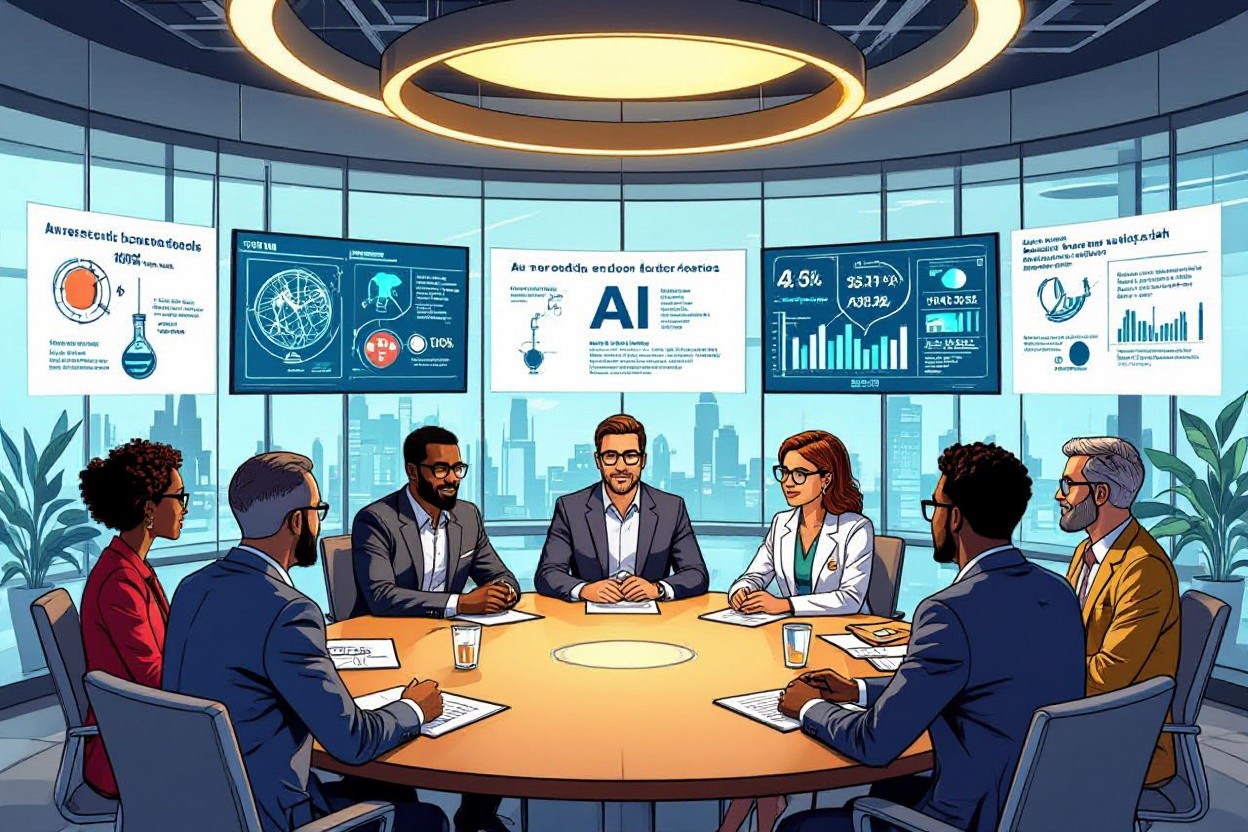
The Ethical Frontier: Navigating AI’s Moral Implications
Bias in AI Systems: Identifying and Mitigating Discrimination
Bias often enters through training data and objective functions: ProPublica’s 2016 analysis of the COMPAS recidivism tool showed Black defendants were nearly twice as likely to be incorrectly labeled high-risk compared with white defendants, and Amazon abandoned a recruiting tool in 2018 after it systematically downgraded resumes that included the word “women’s.” You can detect these problems by running disaggregated performance analyses (by race, gender, age, location) and by applying established fairness metrics such as demographic parity, equalized odds, and disparate impact ratios like the U.S. EEOC’s 80% (4/5ths) rule used in employment law.
Mitigation requires interventions across the pipeline: pre-processing methods (reweighting or synthetic augmentation to fix skewed samples), in-processing constraints (adversarial debiasing or fairness-aware loss functions), and post-processing calibration to align scores across subgroups. Practical tools exist—IBM’s AI Fairness 360, Google’s What-If Tool, and Microsoft’s Fairlearn—and documenting datasets with “datasheets” and models with “model cards” (as proposed in academic literature) helps you trace provenance and assumptions. Continuous monitoring and community-driven audits are vital; the Gender Shades study (2018) that found up to 34.7% error for dark-skinned women in commercial gender classifiers versus 0.8% for light-skinned men shows how performance can vary wildly across populations if you don’t test broadly.
Accountability and Transparency: Who’s Responsible for AI Decisions?
Responsibility typically sits across several actors: model developers who design objectives, organizations that deploy systems in real-world contexts, and regulators who set compliance baselines. GDPR’s provisions on automated decision-making and the EU’s risk-based AI Act proposal place legal obligations on deployers for high-risk systems, while the FDA has already authorized autonomous AI diagnostics (for example, IDx-DR for diabetic retinopathy in 2018), creating precedent for manufacturer liability and post-market surveillance. High-profile incidents—such as investigations into Tesla Autopilot crashes by U.S. regulators—illustrate how unclear boundaries between human and system responsibility can delay remediation and erode public trust.
Transparency practices you can implement include comprehensive logging (data lineage and decision trails), explainability methods tailored to the use case (local explanations like SHAP for credit scoring versus global rules for triage systems), and independent algorithmic audits or third-party certifications. Cities and jurisdictions are starting to require them: New York City’s ADS Law mandates impact assessments for automated decision systems in municipal procurement, giving you a model for combining public disclosure with technical review. Contracts and SLAs should explicitly assign responsibilities for monitoring, updates, and incident response to avoid finger-pointing after harm occurs.
Operationalizing accountability means creating governance and remediation paths before deployment: map data sources and retention policies, enforce version control and access logs, define measurable acceptance thresholds (for example, target parity across false positive rates), and set up an appeals process for affected individuals. You should also budget for external audits and insurance, publish impact assessments to build stakeholder trust, and maintain a post-deployment monitoring dashboard that tracks fairness, safety, and performance metrics so you can detect drift and roll back or retrain models quickly when problems appear.
The Future of Human-AI Collaboration: Bridging Skills and Machines
Upskilling the Workforce: Preparing for an AI-Driven Economy
World Economic Forum analysis estimated that by 2025 roughly 85 million jobs may be displaced by automation while 97 million new roles could emerge, so you need a clear plan for skill transitions rather than hope for natural adjustments. Corporations and public institutions are already responding: Amazon committed to retrain 100,000 U.S. employees by 2025, and AT&T allocated a $1 billion training initiative to shift staff into higher-value digital roles. You can use these examples to benchmark ambition in your organization and prioritize investments in data literacy, AI tooling, and domain-specific analytics skills.
Practical upskilling pathways you can implement include short modular credentials (micro-credentials and certificate programs), on-the-job rotations that pair domain experts with AI engineers, and employer-funded apprenticeships tied to measurable outcomes. Partnering with community colleges or online platforms like Google Career Certificates and Coursera accelerates reach; internal metrics should measure not just course completions but changes in productivity and role mobility. When you design curriculum, focus first on transferable capabilities — data intuition, model interpretation, and prompt design — so people can adapt as tools evolve.
Creative Partnerships: When Humans and Machines Innovate Together
AlphaFold’s release, which provided predicted structures for over 98% of human proteins, shows how AI can become a research partner rather than just a tool; you can now ask biological questions previously blocked by long structure-determination timelines. In pharmaceuticals, BenevolentAI’s use of machine learning to surface Baricitinib as a candidate for COVID-19 treatment demonstrates how AI suggestions, validated by human scientists, can accelerate real-world outcomes. Creative industries display similar patterns: the band YACHT used machine learning to co-compose an album, and artists like Refik Anadol fuse GANs with large cultural datasets to produce novel public installations — in these cases you act as curator, editor and final arbiter of aesthetic direction.
You should treat generative models as copilots that amplify ideation and rapid prototyping rather than replacements for domain expertise. Tools such as GitHub Copilot and Adobe Sensei are already embedded into professional workflows to reduce boilerplate and speed iteration; your role shifts toward framing problems, vetting outputs for bias and feasibility, and integrating model outputs into validated processes. Establishing feedback loops — where human corrections are fed back to refine models — produces both better outputs and on-the-job learning for your teams.
To get more from creative human-AI partnerships, design workflows that formalize the split of labor: let models handle scale and pattern discovery while you handle context, ethics, and synthesis. In drug discovery examples, AI can reduce candidate lists from thousands to dozens, but laboratory validation by researchers remains necessary; you’ll find the greatest gains where iterative cycles of suggestion, human evaluation, and model refinement are institutionalized. Address IP, provenance, and dataset transparency up front so the innovations you co-create with machines are defensible and commercially viable.
The Political Landscape: AI’s Influence on Governance
Policy Making and Data: Harnessing AI for Better Decision-Making
Governments now mine massive, multi-source datasets—tax records, satellite imagery, public sensor feeds and mobility reports—to model outcomes and target interventions. Estonia’s e‑governance architecture, with its X‑Road data exchange and digital ID systems established in 2001, lets you access about 99% of public services online and gives policymakers a near real‑time view of service usage; that same interoperability is what enables predictive maintenance for infrastructure and faster crisis response. The European Commission’s April 2021 proposal for the AI Act frames how you’ll see “high‑risk” public sector systems regulated, insisting on documentation and conformity assessments for models that affect health, justice or elections.
Examples from the pandemic illustrate how analytics shape policy: public mobility datasets from Google’s Community Mobility Reports (released in March 2020) informed decisions on lockdown timing and transit adjustments in dozens of cities. At the same time, you should understand the technical limits—biased training data can produce discriminatory outcomes. ProPublica’s 2016 analysis of the COMPAS recidivism algorithm found significant disparities in false‑positive rates for Black versus white defendants, a concrete case showing why auditability, transparency and public oversight must accompany any deployment that changes people’s legal or economic standing.
Risk of Misinformation: The Role of AI in Public Discourse
AI amplifies both the speed and the subtlety of political messaging: microtargeting algorithms and automated accounts can tailor narratives to narrow demographic slices, while data‑driven persuasion campaigns operate at scale. The Cambridge Analytica scandal (publicized in 2018) exposed how harvesting data on roughly 87 million Facebook users enabled psychographic profiling used in political campaigns, showing you how behavioral data can be weaponized to influence voting intentions. Deepfakes and synthetic audio add another layer—manipulated videos have already been deployed in local-level smear campaigns and fundraising appeals, altering your perception of who said what.
Platforms and regulators are responding, yet detection and moderation remain imperfect. The EU’s Digital Services Act and national policy efforts aim to increase platform accountability for harmful content and disinformation, while companies deploy machine learning classifiers to flag manipulated media and coordinated inauthentic behavior. Automated systems can remove millions of posts quickly, but you still see false negatives and context errors; that means AI both helps and complicates the public-sphere information environment you rely on to make civic decisions.
For practical steps you can take, verify viral claims against reputable fact‑checks (AP Fact Check, PolitiFact, Snopes), run reverse image searches on suspicious images, and look for provenance metadata or corroborating sources before sharing. Researchers are advancing technical defenses—Microsoft’s Video Authenticator and community efforts like the Deepfake Detection Challenge pushed progress on forensic tools—but as an informed participant in public discourse you should treat sensational media with skepticism, check original sources, and prefer reporting from outlets that publish methods and evidence rather than headlines alone.
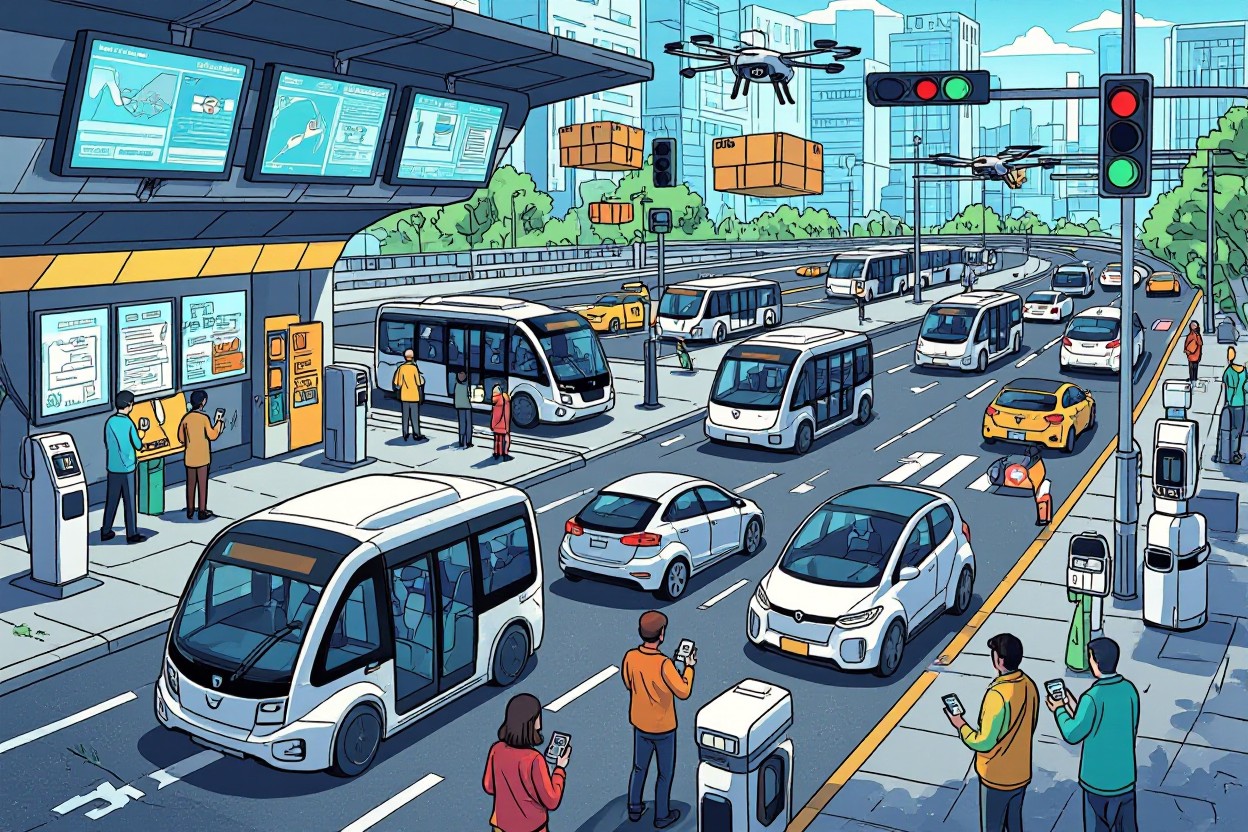
Transforming Transportation: Autonomous Systems and Logistics
Road Safety: AI-Driven Solutions for Safer Driving
Sensor fusion, machine learning perception stacks, and real-time edge inference are already changing how collisions are prevented: automatic emergency braking (AEB), lane-centering, and adaptive cruise control combine cameras, radar, and lidar to detect hazards faster than a human can react. Studies and deployments indicate these ADAS features can cut certain crash types substantially; for example, fleet analyses and insurer data have shown forward-collision mitigation systems reducing rear-end accidents by a sizeable margin, while companies like Mobileye and Volvo report measurable declines in injury crashes after wide ADAS adoption.
Regulators and operators are learning from real-world programs: Waymo and Cruise have logged millions of test miles in complex urban environments to refine behavior prediction and scenario handling, and NHTSA probes into some high-profile Autopilot incidents have accelerated attention on human-machine handoffs and transparency. You can expect continued improvements as vehicles combine richer mapping data, V2X communications, and over-the-air model updates to handle edge cases that previously led to malfunctions or misclassification of pedestrians, cyclists, and unusual objects.
Last-Mile Delivery: The Future of Freight and Personal Shipping
Last-mile logistics already consumes a disproportionate share of delivery costs — often over half of the final bill — so you see carriers and retailers investing heavily in AI route optimization, dynamic dispatch, and micro-fulfillment hubs to shrink distance and time. UPS’s ORION routing system, for example, cut millions of miles from routes and saved the company tens of millions of dollars annually; smaller players are using similar algorithms to collapse delivery windows and increase density per stop, which directly improves margins and reduces emissions.
Autonomous ground robots and low-speed delivery vehicles (Nuro, Starship, Amazon Scout) plus drone programs (Zipline, Wing, and trial initiatives from Amazon and Walmart) are moving from pilots to scaled operations in select cities and regions. Zipline’s medical drone network in Rwanda and Ghana has completed hundreds of thousands of on-demand deliveries of blood and vaccines, demonstrating that AI-guided aerial systems can reliably serve time-sensitive supply chains, while Nuro’s exemption-based deployments in the U.S. show demand for contactless, curbside delivery of groceries and prepared foods.
Operational challenges remain that will shape how quickly you can adopt these technologies: payload and range limits constrain drone and small-robot use to specific package types and radii, urban densification and local regulation affect routing and airspace access, and cybersecurity plus public acceptance influence rollout timelines. Expect hybrid models in the next five years — human couriers supported by AI-optimized routes and autonomous vehicles handling standardized, short-hop deliveries from micro-hubs — which will change how you design supply chains, set delivery fees, and measure customer experience.
AI in Arts and Entertainment: Redefining Creativity
AI-Generated Content: Blurring the Lines Between Creator and Machine
Generative models such as DALL·E, Stable Diffusion, MidJourney and GPT-4 have moved beyond novelty into everyday creative tooling: artists use them to produce concept art in minutes, authors generate drafts and beats, and composers experiment with OpenAI’s Jukebox or AIVA for new motifs. The 2018 sale of the AI-generated portrait “Edmond de Belamy” at Christie’s for $432,500 remains a vivid case study in market interest, while studios and indie creators alike now accelerate previsualization and concept cycles by generating dozens of variants in the time a single human sketch once took.
Legal and ethical frictions have followed that speed: major lawsuits (for example, Getty Images versus a generative model provider in 2023) and debates about dataset provenance have forced platforms to adopt provenance tools like Adobe’s Content Credentials, and to consider watermarking outputs. You will often find the most productive workflows are collaborative: human direction, curated prompt engineering, and selective post-editing combine to yield work that leverages scale and novelty from models while preserving the human judgment that defines style and narrative intent.
Audience Engagement: Predicting Trends and Consumer Preferences
Recommendation engines and trend prediction models now power major audience platforms and advertising buys. Netflix has long reported that personalized recommendations drive a large majority of viewing, and Spotify’s Discover Weekly—used by tens of millions of listeners—demonstrates how algorithmic curation can surface long-tail content. TikTok’s For You feed, serving more than a billion monthly users at scale, shows how models analyzing hundreds of behavioral signals (watch time, rewatches, shares) can create overnight virality and compress trend cycles into hours rather than weeks.
Marketing and release strategies have also been reshaped: studios use analytics firms like Cinelytic to forecast box-office performance, and 20th Century Fox experimented with IBM Watson to craft a trailer for Morgan (2016) by identifying emotionally resonant clips and audience reaction patterns. You can leverage the same principles at smaller scale—A/B testing thumbnails, running micro-targeted ads, and optimizing for early retention metrics often yields outsized improvements in conversion and reach compared with traditional one-size-fits-all campaigns.
Practical steps for applying these insights include instrumenting your content to capture retention curves and drop-off points, experimenting with short-form variations to feed recommendation loops, and combining platform analytics (TikTok Creator Tools, YouTube Studio) with third-party services (Chartmetric for music, Tubebuddy for video SEO). By treating engagement data as an iterative creative input, you increase the likelihood that your next release catches a trend rather than chasing one.
The Integration Challenge: Adopting AI Across Industries
Overcoming Resistance: Change Management in Organizations
You will encounter resistance that often looks less like outright opposition and more like a mix of skepticism, fear about job displacement, and uncertainty over new workflows. Practical moves that work include appointing visible AI champions in each business unit, running tightly scoped pilots with measurable KPIs (for example, invoice-processing pilots that track throughput, error rate and cost per invoice), and publishing results internally so teams can see concrete benefits. A McKinsey-style finding—surveys repeatedly show fewer than one in four firms have truly scaled AI—underscores how pilots that demonstrate a clear ROI are the most persuasive tool for breaking inertia.
You should pair pilots with a deliberate reskilling roadmap: micro-credential programs, on-the-job rotations, and incentivized internal mobility. Companies such as AT&T have invested heavily in workforce transformation—committing roughly $1 billion toward reskilling—to reduce friction when new technologies arrive. Establishing clear metrics for adoption (time-to-proficiency, percentage of tasks automated, employee satisfaction) and linking them to manager goals turns abstract change into operational priorities that managers and staff can rally around.
Infrastructure Needs: Building the Technological Foundations
You need a technology stack that matches the scale and performance profile of the AI you plan to run. Large model training typically requires GPU/TPU clusters and can cost millions to tens of millions of dollars for state-of-the-art models; for inference, consider GPU-backed instances or optimized CPU pipelines depending on latency and throughput requirements. Hybrid cloud architectures let you shift heavy training workloads to public clouds while keeping sensitive inference or regulated data on private infrastructure—financial firms, for example, often retain on-prem inference to meet compliance and latency constraints.
You will also need robust MLOps and data engineering layers: versioned data lakes, feature stores, CI/CD for models, and monitoring to detect drift and performance degradation. Tools such as Apache Kafka for streaming ingestion, Delta Lake or Iceberg for reliable data lakes, and MLflow or Kubeflow for experiment tracking are common building blocks. Plan capacity in storage (tens of terabytes to petabytes depending on use case), network throughput (high-bandwidth interconnects between compute nodes), and observability systems that produce audit trails required for governance and incident investigation.
Security and compliance cannot be an afterthought: implement encryption at rest and in transit, role-based access controls, and data minimization workflows (tokenization or differential privacy where applicable). In regulated industries you’ll need lineage and explainability mechanisms that let you answer “why” a model made a prediction; incorporating model cards and automated bias checks into deployment pipelines reduces regulatory risk and speeds audits, turning infrastructure investment into a competitive enabler rather than just cost.
The Global Landscape: AI in International Relations
Soft Power and Influence: How Countries Leverage AI
China’s 2017 Next Generation Artificial Intelligence Development Plan explicitly set a national timeline to become the world leader in AI by 2030, and you can see the strategy reflected in state-backed investment funds, fast-growing AI start-ups, and the export of surveillance technologies from firms such as Hikvision and Dahua to partners across Africa and Southeast Asia. Digital infrastructure projects tied to the Belt and Road initiative increasingly include AI-enabled systems for smart cities and public security, which shape local norms about privacy and public order while expanding China’s commercial reach.
Western influence operates differently: open academic ecosystems, widely shared preprints, and publicly available models from U.S. and European organizations contribute normative leadership through transparency and technical literacy. The EU’s AI Act — the first major regional regulatory framework aimed at risk-based restrictions on high-risk systems — is already nudging partners and vendors to align with its requirements if they want access to European markets, effectively exporting governance preferences as an element of soft power.
Collaboration vs. Competition: Global Policies and AI Ethics
Multilateral instruments such as the OECD AI Principles (adopted in 2019 and endorsed by more than 40 countries) and UNESCO’s 2021 Recommendation on the Ethics of AI provide common language on fairness, accountability, and human rights, while coordination platforms like the Global Partnership on AI and the ISO/IEC JTC 1/SC 42 standards work attempt to translate those principles into interoperable technical standards. You will notice, however, that strategic competition undercuts full harmonization: U.S.-led export controls on advanced AI accelerators in 2022–2023 and allied measures to limit the flow of cutting-edge semiconductor technology to certain states forced companies and research labs to redesign supply chains and model-training plans.
National data protection regimes add another layer of complexity. The EU’s GDPR, China’s Personal Information Protection Law and Data Security Law, and a patchwork of data-localization rules in markets from Brazil to Russia mean you must navigate divergent obligations when training models on cross-border datasets, partnering with foreign institutions, or launching services internationally. That regulatory fragmentation raises compliance costs and shapes corporate decisions about where to host compute, how to label and store datasets, and which markets to prioritize for rollout.
For your organization the practical implications are concrete: engage with standards bodies (ISO/IEC workstreams, GPAI working groups), build legal and technical capability to manage export-control and data-protection requirements, and design model-development pipelines that can be segmented by jurisdiction to preserve both innovation velocity and market access. Monitoring diplomatic developments — from summit communiqués to bilateral trade measures — will help you anticipate where research collaboration may be welcomed or restricted, and where ethical expectations will translate into binding rules that affect deployment.
Final Words
Conclusively, you stand at a moment where AI shapes how you work, learn, and make decisions; understanding its capabilities and limitations empowers you to apply it responsibly and effectively. By engaging with AI thoughtfully, you can leverage its analytical speed and pattern recognition to augment your judgment, enhance productivity, and solve complex problems while maintaining ethical boundaries and human oversight.
As you move forward, cultivate literacy about data quality, algorithmic bias, and governance so your choices steer development toward equitable outcomes; embrace continuous learning to keep your skills aligned with advancing tools and participate in dialogues that set standards and safeguards. This active involvement ensures that AI becomes a dependable partner that amplifies human potential and serves societal needs under your stewardship.