
Currently Empty: 0,00 €


Cooking
Your Passport to Home Cooking Mastery
Many home cooks overlook foundational techniques and flavor-building strategies; this guide equips you with clear methods, reliable recipes, and practical tips to expand your repertoire, refine your instincts, and make confident decisions in the kitchen so you can transform everyday ingredients into memorable meals.
The Culinary Foundations: Essential Skills Every Home Cook Should Master
Build a reliable toolkit of mise en place, knife control, heat management, seasoning by layers, and basic sauce technique; these habits shave prep time and raise consistency. Aim to taste and adjust at three points—mid-cook, end, plated—and track timings (e.g., 20–30 minutes for roasted root veg) so your intuition aligns with repeatable results.
Knife Skills: Precision Cuts for Perfect Meals
Your efficiency jumps when you use a pinch grip, guide hand claw, and practice five cuts—slice, chop, dice, julienne, brunoise—to uniform sizes: 1/8–1/4 inch for most veg. Hone before service, sharpen every 1–3 months depending on use, and choose a hardwood board to preserve edges; a proper tip-down rocking motion keeps cuts even and safe.
Cooking Techniques: Sautéing, Roasting, and Beyond
Sauté requires hot oil, a single layer, and quick agitation—shrimp take 1–2 minutes per side; stainless or carbon steel gives best fond for deglazing. Roast at 375–450°F depending on density—roots at 400–425°F for 20–35 minutes—while high heat caramelizes sugars; use an oven thermometer and flip once for even browning.
Different methods leverage heat differently: sear at very high heat to form a Maillard crust, then finish in a 275°F oven for an even cook (reverse sear for 1–1.5″ steaks); convection cuts roast time ~20–25%. Track internal temps—chicken 165°F, pork 145°F, medium steak 130–140°F—and finish with acid (vinegar, lemon) or herb oil to lift flavors.
Flavors Unlocked: Understanding Ingredients and Seasonings
Salt, acid, fat and heat form the practical framework you use to balance dishes: a pinch of kosher salt (≈1/4 tsp) can lift sweetness, 1–2 tsp of vinegar or lemon brightens stews, and a tablespoon of good olive oil or butter adds richness and mouthfeel. Taste mid-cook and finish with a small sprinkle of finishing salt or a squeeze of acid to make individual flavors pop.
The Role of Fresh Herbs and Spices in Elevating Dishes
Fresh herbs like basil, cilantro and parsley deliver bright, volatile notes best added in the last 1–2 minutes or as a garnish, while sturdier herbs—rosemary and thyme—stand up to long braises. Toast whole spices 1–2 minutes to release oils; grind before use for peak aroma. Expect ground spices to peak within 6–12 months and whole spices to remain potent for 2–3 years, so rotate your supply.
Pantry Staples: Building a Flavor Powerhouse
Keep a compact, high-impact pantry: canned San Marzano tomatoes, extra-virgin olive oil, low-sodium soy sauce, miso paste, anchovies, capers, canned beans, three vinegars (white, apple cider, sherry), smoked paprika and good-quality chicken or vegetable stock. Those items let you assemble quick umami-packed sauces, dressings and soups—1 anchovy can deepen a pan sauce for 4 servings; 1 tsp miso enriches 250 ml of broth.
Store and combine staples strategically: rotate canned goods every 12–18 months, keep oils in dark bottles below 25°C, and use airtight jars for spices. Quick combos—1 anchovy dissolved in 2 tbsp olive oil for vinaigrette, or 1 tsp miso in 250 ml broth—deliver instant depth; add lemon or a pinch of chili flakes for brightness and heat when plating.
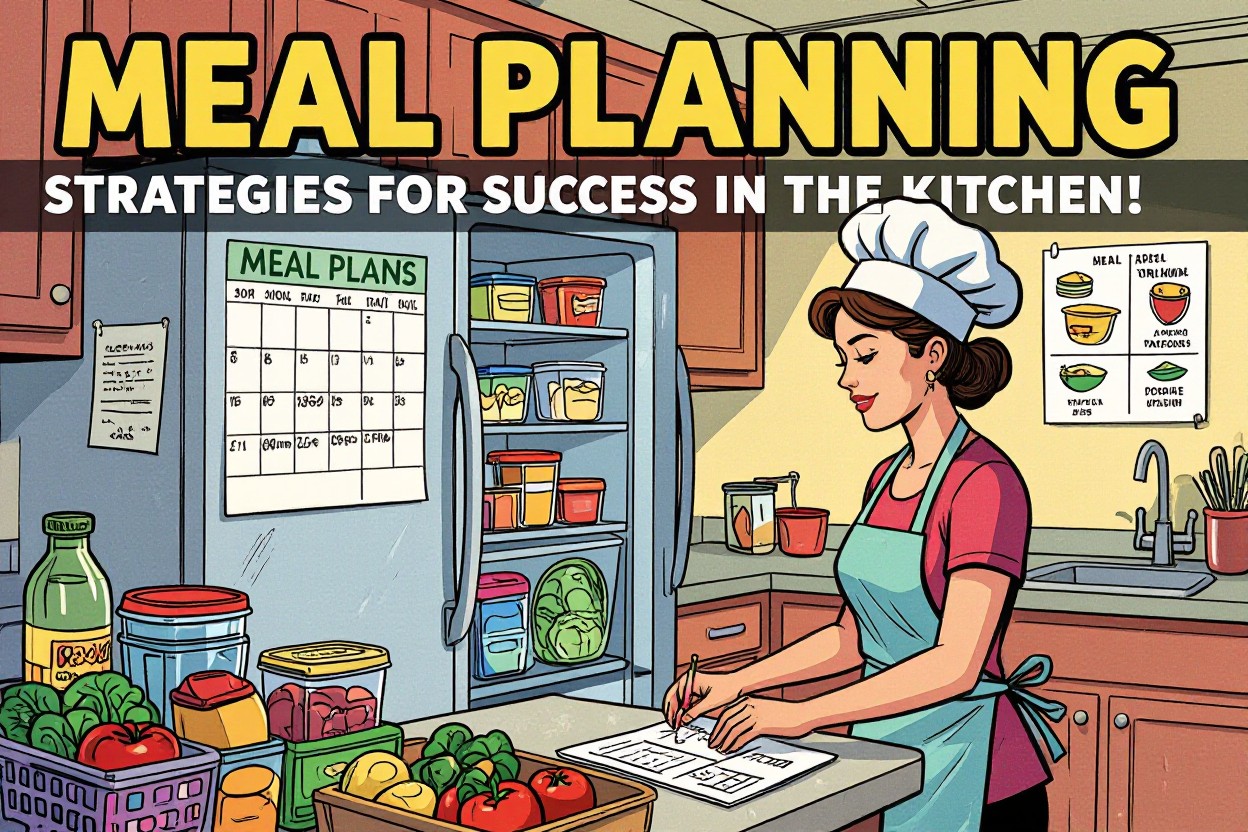
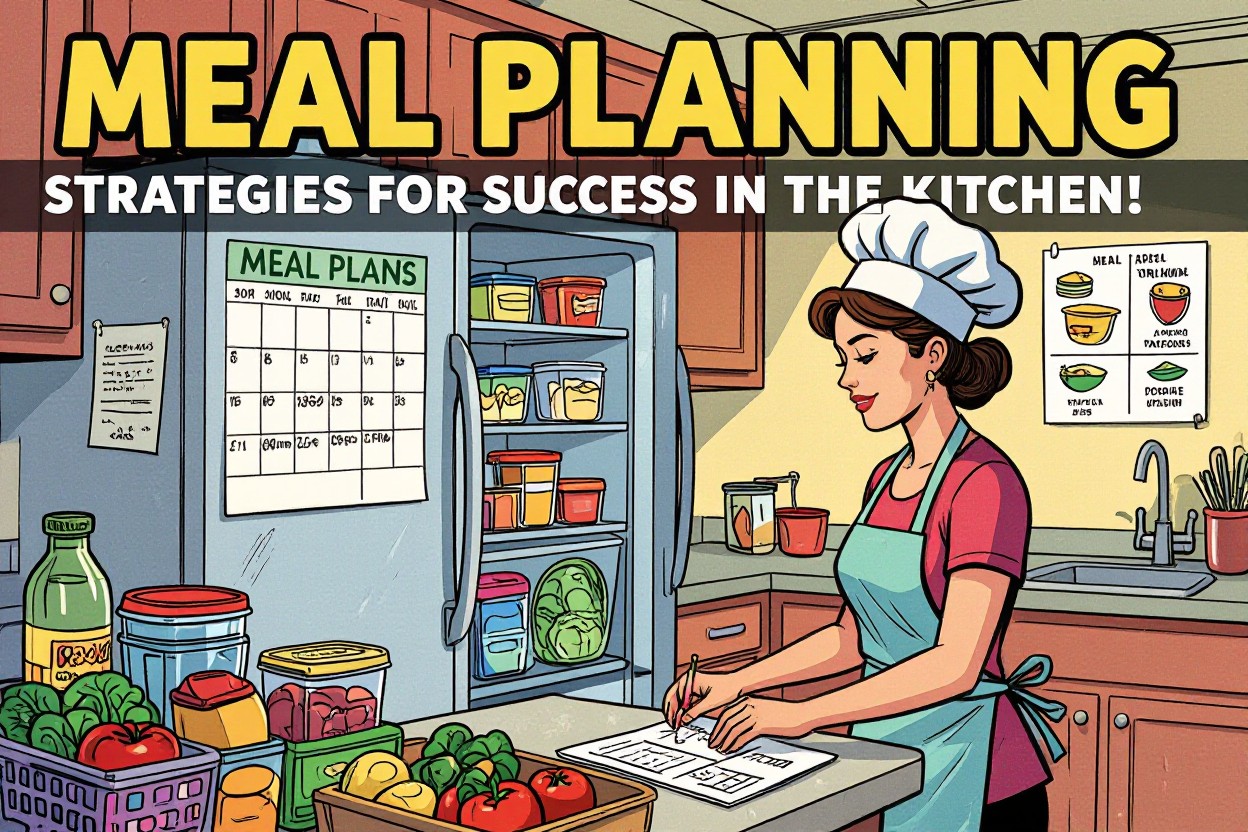
Meal Planning: Strategies for Success in the Kitchen
Map out a seven-day plan using a simple grid: note proteins, grains, veggies, and leftovers slots. Assign two theme nights (e.g., Mexican Tuesday, Soup Sunday) to simplify decisions, inventory staples before you shop, and build a 30‑minute backup meal for busy days. Batch-cook 2–3 proteins and one grain on a single afternoon to create 8–12 ready meals, label containers with dates, and rotate frozen portions to avoid waste.
Balancing Nutrition and Flavor in Weekly Menus
Use the plate rule: fill half with vegetables, a quarter with lean protein (3–5 oz cooked), and a quarter with whole grains or starchy veg (½–1 cup cooked). Add one weekly legume-based dish for fiber and micronutrients, swap heavy creams for yogurt or olive oil, and mix roasted, raw, and braised preparations to keep textures and flavors interesting while hitting vitamins and 20–40 g protein targets per meal.
Time-Saving Techniques for Busy Home Cooks
Adopt a 90–120 minute weekly prep block: roast 2–3 lb chicken (40–45 min), cook 2 cups dry grain (15–20 min), and chop vegetables for four meals (20 min). Use an Instant Pot to cut long braises from 3 hours to ~30 minutes, rely on sheet‑pan dinners that finish in 20–30 minutes, and keep frozen vegetables and pre-washed greens to shave 10–15 minutes per night.
Turn prep into systems: label a freezer rotation (date and contents), stock 6 versatile sauces (tomato, tahini, pesto, chili oil, vinaigrette, yogurt‑herb) to transform leftovers, and portion proteins into 4–6 single‑meal packs. A typical household of four that preps proteins and grains once weekly can reduce weeknight cooking time by roughly 50%, converting 60‑minute dinners into 20–30 minute assemblies.
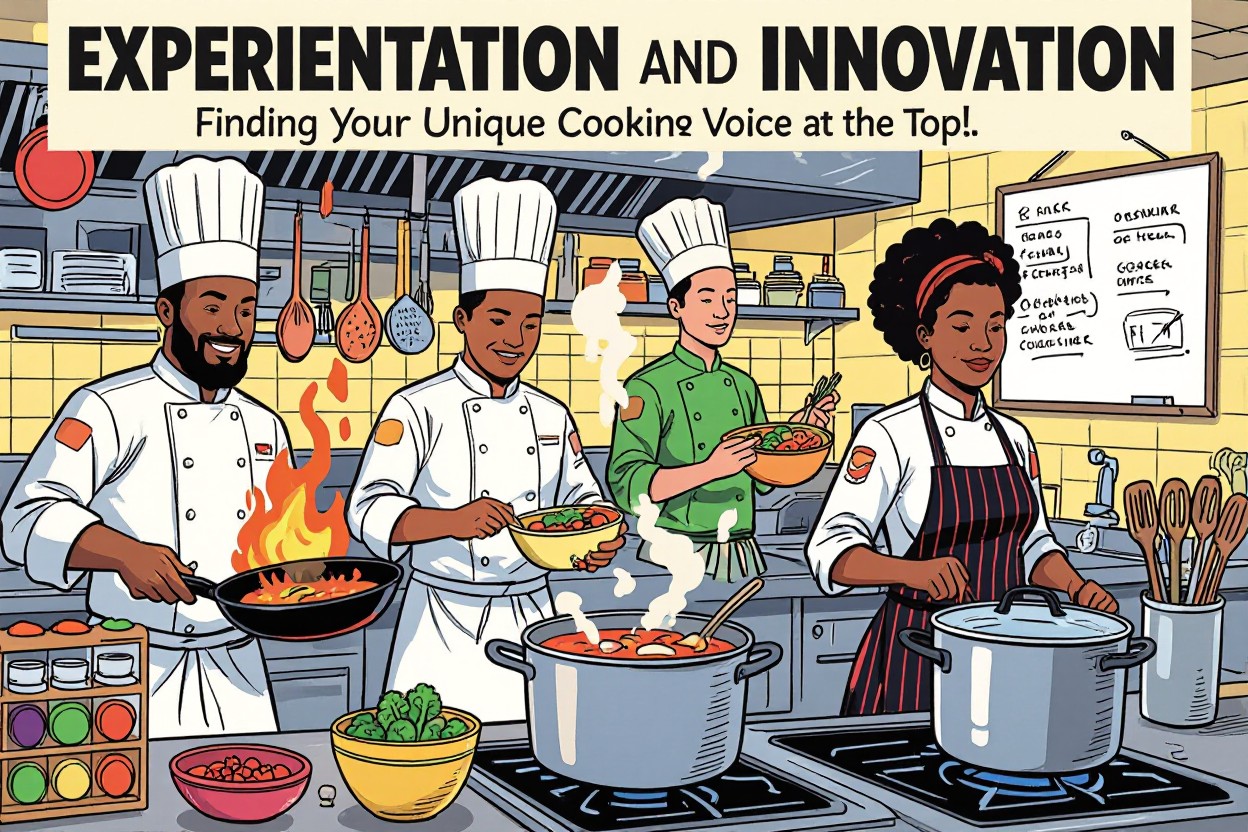
Experimentation and Innovation: Finding Your Unique Cooking Voice
Push boundaries by treating your kitchen like a lab: commit to trying one new technique per month, track five variables (ingredient, time, heat, fat, seasoning), and make three controlled variations of a recipe to isolate effects. Use ratios—1:2:3 for vinaigrettes or 2:1:1 for quick marinades—to speed iteration. Set constraints (30-minute dinners, $10 per person) to spark creativity and convene a tasting panel of three to gather consistent feedback for refinement.
Embracing Culinary Failure: Learning from Mistakes
Treat failed dishes as experimental data: log date, recipe, three variables changed, and a 1–10 taste score so you can replicate wins. Expect roughly one in three tests to miss the mark; that pace accelerates learning. Salvage moves you can use immediately include adding acid (1 tablespoon vinegar or lemon), diluting with 1/2–1 cup broth, or finishing with a pat of butter to smooth harsh edges. Review logs monthly to spot patterns.
Fusion Cooking: Blending Cultures on Your Plate
Mix traditions with clear intent: pick one element from each cuisine—e.g., Korean gochujang and Mexican masa—and build around complementary textures and flavors. You can look to Roy Choi’s Kogi trucks, which fused Korean barbecue with tacos to great effect, as a model for marrying street-food formats. Aim for balance among acid, fat, and umami, and test small: make six tacos or four sliders to dial proportions before scaling up.
You should start by listing two to three hallmark ingredients from each tradition—soy, sesame, scallion; or cilantro, lime, masa—then create three prototypes that swap a single element to compare. Choose one unifying technique, such as fermentation or smoking, to tie disparate flavors together. Try a specific prototype: miso-glazed roasted chicken finished with a parsley-garlic chimichurri and test on four portions, noting which garnish or acid best heightens contrast.
The Community Connection: Engaging with Fellow Food Enthusiasts
Join a local supper club, farmers-market meetup, or online cooking challenge to accelerate your skills; mixing with groups of 6–12 home cooks exposes you to regional ingredients, seasonal menus, and repeatable techniques you can adopt. You’ll trade recipe tweaks, get hands-on feedback, and discover sources for specialty items—one home baker in a 10-person swap increased her pastry repertoire by trying three new laminated-dough methods over six months.
Cooking Classes and Workshops: Learning from Experts
Sign up for a 2-hour knife-skills session or a 4-week bread-making series at a community college or independent school to gain measurable progress: expect to master at least five techniques per short course. You can also attend chef-led pop-ups and intensive weekend workshops ($40–$200) where instructors give live corrections, ingredient substitutions, and plating advice that you can replicate in your kitchen the next day.
Online Platforms: Sharing Recipes and Inspiration
Post your recipes on sites like NYT Cooking or Serious Eats, join subreddit communities, and use Instagram carousels or TikTok shorts to showcase step-by-step processes; platforms such as YouTube (2+ billion logged-in monthly users) and Pinterest (hundreds of millions of monthly users) drive discovery and long-term traffic to your work. You’ll gain recipe validation through saves, comments, and remix videos that reveal which techniques resonate.
To expand reach, format content for each channel: create 6–12 photo carousels on Instagram that break down mise en place, 45–60 second how-to clips for TikTok, and printable recipes with clear timings for Pinterest. Track engagement with saves and comments—aim for at least 50 saves or 20 comments in the first week as an early signal—and collaborate on cross-posts or themed challenges to turn single posts into lasting community threads.
Conclusion
The skills and techniques in Your Passport to Home Cooking Mastery give you a clear roadmap to elevate daily meals, refine flavor balance, and confidently adapt recipes to suit your pantry and tastes. By practicing methods, exploring global ingredients, and tuning presentation, you will build reliable instincts that make cooking efficient, creative, and deeply satisfying.